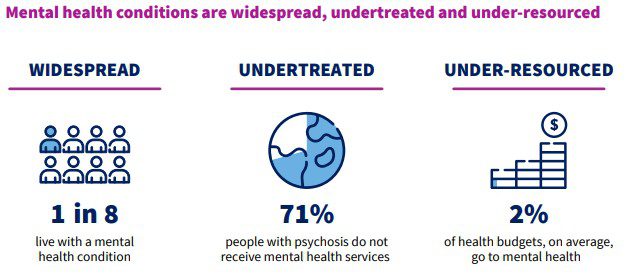
In today’s fast-paced, always-online world, Nearly one in eight people globally live with a mental disorder. Many of us carry stress like a badge of honor, pushing through fatigue, anxiety, and emotional exhaustion—until we hit a breaking point. But what if we didn’t wait that long?
Understanding the mental health warning signs early on can be the difference between surviving and thriving. Just like your body sends signals when something’s wrong—like pain, fever, or fatigue—your mind does too. The key is learning to listen.
Let’s explore the common, often overlooked signs that your mental health needs a reset—and what to do about it.
Here are some powerful and eye-opening facts about mental health, backed by research and global health organizations:
🧠 General Mental Health Facts
1 in 8 people worldwide live with a mental health disorder. – According to the World Health Organization (WHO), over 970 million people globally had a mental health condition in 2019.
Depression is the leading cause of disability worldwide. – It affects over 280 million people, interfering with daily life, productivity, and relationships.
Anxiety disorders are the most common mental health condition. – They affect 301 million people globally, with women more likely to be diagnosed than men.
Mental health starts early. – Half of all mental health conditions begin by age 14, and 75% by the mid-20s, but most go undetected and untreated.
Suicide is a major public health issue. – Close to 800,000 people die by suicide every year—one every 40 seconds.
🧬 Mental Health & Physical Health
Mental and physical health are deeply connected. – People with serious mental illness are at higher risk of chronic diseases like heart disease, diabetes, and obesity.
Stress weakens the immune system. – Chronic mental stress has been linked to inflammation, hormone imbalance, and gut issues.
📲 Modern Life & Mental Health
Screen time and social media can impact mental health. – Excessive use has been linked to increased anxiety, depression, and loneliness, especially in teenagers. Digital detoxes improve mood and attention span. – Reducing phone use for just 1 hour a day has shown improvements in sleep and focus.
Mindfulness practices like meditation can reduce anxiety by up to 60%. – Just 10 minutes a day can make a measurable difference in mental well-being.
Why Mental Health Warning Signs Matter
Mental health challenges rarely happen overnight. They build up gradually, starting as subtle shifts in your energy, emotions, and behaviors. These signs are your mind’s way of asking for help—not punishment, not weakness, but a request for support and realignment.
By spotting these signs early, you can reset, recover, and rebalance before burnout, anxiety, or depression take full hold.
1. You’re Constantly Tired, Even After Sleeping
Feeling physically and emotionally drained, even after a full night’s sleep, is a major red flag.
🧠 Fact: Chronic stress affects the hypothalamus-pituitary-adrenal (HPA) axis, which regulates sleep. Over time, this can cause fatigue and sleep disturbances. 📊 Figure: According to the American Psychological Association, 21% of adults report feeling tired due to stress most days.
What it feels like:
You wake up groggy.
You rely heavily on caffeine.
You feel like you’re running on autopilot.
Tip: Prioritize good sleep hygiene. Try turning off screens an hour before bed, and stick to a consistent sleep schedule—even on weekends.
2. You Feel Easily Irritated or Emotionally Numb
Little things bother you more than they used to—or worse, nothing seems to affect you at all.
🧠 Fact: Emotional exhaustion is often a precursor to burnout and can lead to either heightened irritability or emotional detachment (numbness). 📊 Figure: WHO recognizes burnout as a syndrome caused by chronic workplace stress. Nearly 77% of employees have experienced burnout, according to a Deloitte study.
What it feels like:
Snapping at friends or family.
Feeling emotionally “flat.”
Losing patience over minor inconveniences.
Tip: Step back and reflect. Journaling or talking with a trusted friend can help you reconnect with your emotions.
3. You’re Losing Interest in Things You Used to Enjoy
If hobbies, relationships, or even food no longer bring joy, it’s a red flag.
🧠 Fact: This symptom is called anhedonia and is common in people with depression or high stress levels. 📊 Figure: Over 280 million people worldwide live with depression (WHO, 2023), and loss of interest is one of the core symptoms.
What it feels like:
You no longer enjoy music, reading, or socializing.
You find yourself thinking, “What’s the point?”
Even relaxation feels like a chore.
Tip: Start small. Revisit one thing that used to bring joy—even if it’s just for 10 minutes a day.
4. You’re Overthinking or Worrying All the Time
If your brain feels like it never shuts off, especially with negative thoughts, it may be time to hit the reset button.
🧠 Fact: Overthinking is linked to anxiety and can disrupt concentration, sleep, and productivity. 📊 Figure: Around 31.1% of U.S. adults experience an anxiety disorder at some point in their life (NIMH).
What it feels like:
Constant “what ifs.”
Trouble making decisions.
Ruminating on past conversations or mistakes.
Tip: Practice mindfulness. Apps like Headspace or Calm offer easy-to-follow guided meditations.
5. You’re Isolating Yourself from Others
When you start avoiding texts, canceling plans, or feeling like a burden, it’s more than just needing “me time.”
🧠 Fact: Social withdrawal is both a symptom and a contributor to mental health decline. 📊 Figure: Loneliness increases the risk of depression by 40%, and even physical health issues like heart disease (CDC, 2022).
What it feels like:
Saying “I’m just tired” (when you’re really feeling low).
Turning down plans repeatedly.
Feeling disconnected even when surrounded by people.
Tip: Reach out, even in small ways. A simple check-in with a friend or joining an online group can help rebuild connections.
6. You’re Turning to Unhealthy Coping Mechanisms
Sometimes we reach for short-term fixes—like alcohol, junk food, excessive screen time—without realizing we’re masking deeper struggles.
🧠 Fact: Substance use, binge eating, or compulsive behaviors can be signs of underlying mental stress. 📊 Figure: During the pandemic, alcohol use increased by 14% in adults over 30, especially among women (JAMA Network, 2020).
What it feels like:
Binge-watching to escape reality.
Stress-eating or skipping meals.
Drinking or smoking more than usual.
Tip: Replace the habit, not the feeling. Try a walk, a call with a friend, or even 10 minutes of journaling when the urge hits.
7. You Struggle to Make Simple Decisions
Even choosing what to eat or wear feels overwhelming. This is mental fatigue disguised as indecisiveness. Your brain is overloaded.
👉 Tip: Reduce your decision load. Create routines, pre-plan meals, or simplify your to-do list to reduce mental noise.
World Mental Health Report: WHO, 2022
Transforming Mental Health for All: A Global Wake-Up Call
Mental health is no longer the silent crisis—it’s a global emergency. With nearly a billion people living with mental disorders and mental health systems overwhelmed or under-resourced, the time for small steps is over. The World Health Organization’s comprehensive 2022 report, Transforming Mental Health for All, offers a bold call to action for governments, communities, and individuals worldwide.
Nearly one in eight people globally live with a mental disorder, yet mental health services remain underfunded, understaffed, and overwhelmed.
🚨 When to Seek Professional Support
While these signs can be managed through lifestyle changes and self-awareness, persistent symptoms that last more than a few weeks or interfere with daily life deserve professional attention.
You’re not “weak” for asking for help—you’re wise. Just as you’d visit a doctor for recurring pain, a therapist or counselor is trained to guide you back to mental clarity.
🌿 Final Thoughts: Reset, Don’t Ignore
Your mind is constantly talking to you—not with words, but through sensations, reactions, and behaviors. When your inner signals grow louder, don’t dismiss them. Don’t numb them. Listen, and respond with care.
Mental health isn’t about avoiding struggle—it’s about building resilience, creating space for recovery, and learning when to pause.
You don’t need a breakdown to start healing. You just need a moment of honesty and intention.
💬 How to Begin Today:
Choose one mental health warning sign you relate to most.
Write down how it shows up in your life.
Take one action step toward a reset (breathing, journaling, talking to a friend, taking a walk).
You’re allowed to slow down. You’re allowed to reset. Most importantly, you’re allowed to feel better—starting today. 🌱